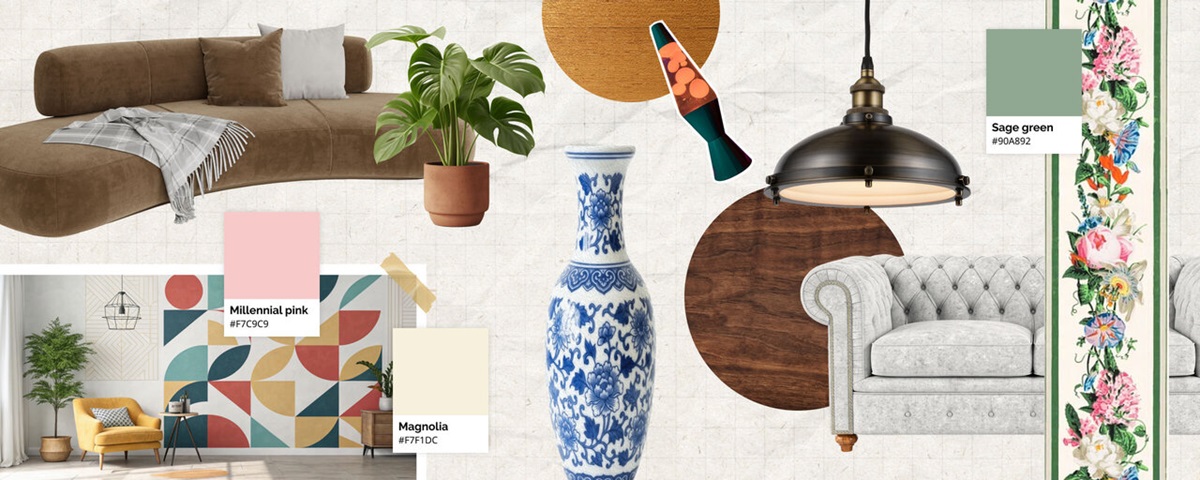
From avocado green suites to millennial grey living rooms, British homes have undergone many transformations over the last 50 years. While some interior design trends have become beloved symbols of their era, others have fallen out of favour.
To explore how British tastes have evolved, we surveyed UK homeowners on the interior design trends they love, loathe and would most like to see make a comeback. We also partnered with celebrity interior designer and TV presenter, Georgina Burnett (aka ‘The Home Genie’), who shared her tips for creating a new home that feels authentic to you – no matter what’s trending right now.
The UK’s most loved and most controversial interior trends
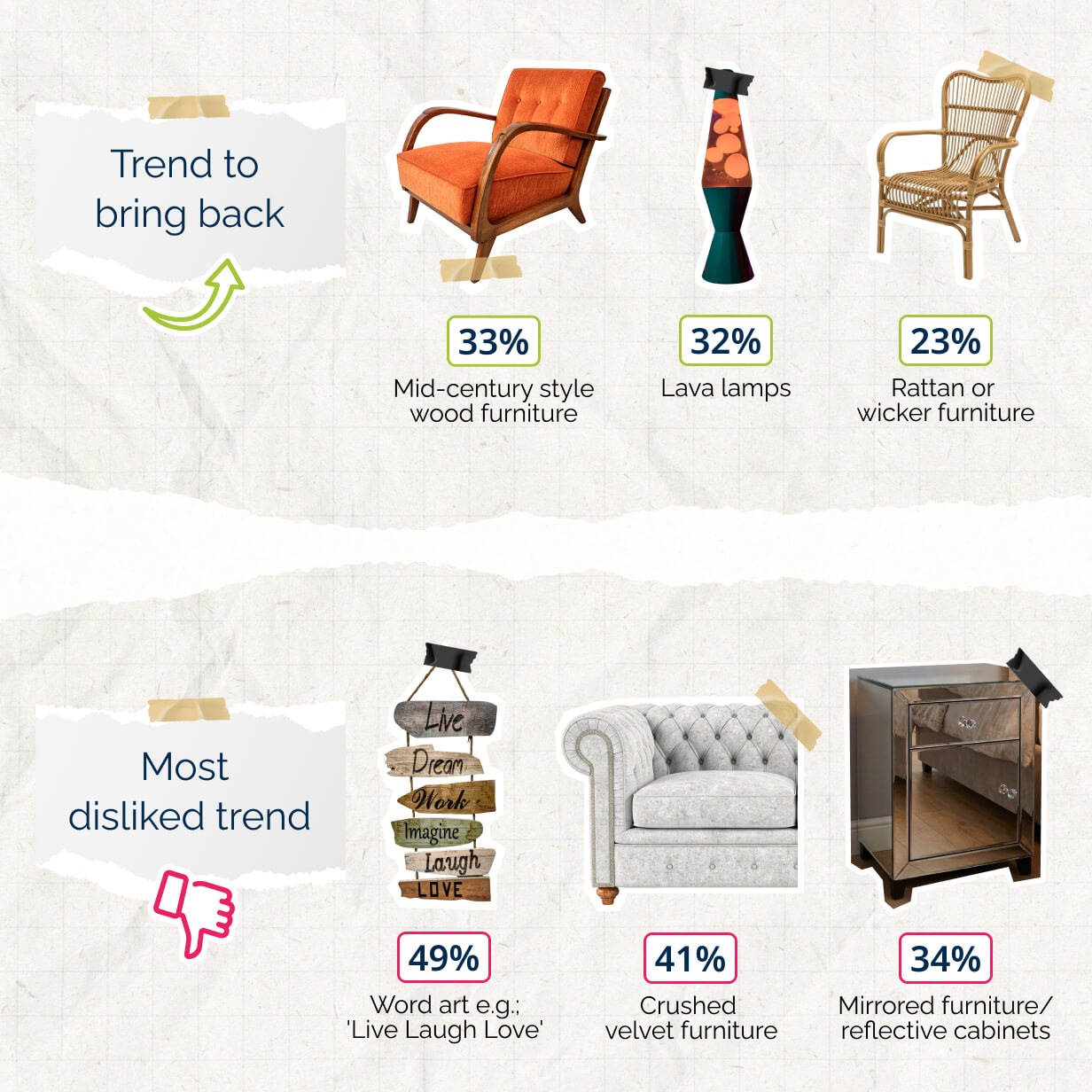
Our survey found clear winners and losers when it comes to British interior design trends of the past 50 years. Nearly half of respondents named word art, such as “Live Laugh Love”, as their least favourite trend, followed by crushed velvet furniture and mirrored cabinets. Word art topped the list in almost every UK region, with the East Midlands the only exception, where crushed velvet was the most disliked trend.
Meanwhile, the trends Brits would most like to revive include mid-century style wood furniture, lava lamps and rattan or wicker furniture. Mid-century furniture proved particularly popular in the South East, Scotland and Yorkshire, while lava lamps were the top comeback choice in the East of England and Wales.
Georgina Burnett commented on the trends:
“We’re definitely living through a nostalgia revival, and I think that’s partly because people are craving things that feel authentic and familiar. Mid-century furniture, rattan and lava lamps all have a strong sense of character that you don’t necessarily get from mass-produced, trend-led interiors.
“The trick is not to recreate the past like a film set. Pick one or two nostalgic pieces and mix them with contemporary elements. A beautiful mid-century sideboard with modern lighting can look fantastic. A rattan chair alongside a contemporary sofa feels fresh, particularly if it’s a vintage one that has been upcycled. And yes, even a lava lamp can work, particularly if you’re embracing a bit of fun!”
Jennifer Burns, Sales Director at David Wilson Homes North West, also commented:
“Many people think a new home limits you to modern interiors, but this absolutely isn’t the case. We design our homes with thoughtful, versatile layouts and neutral finishes, giving customers a blank canvas where they can introduce their own style and preferences.
“Our research shows that people continue to find inspiration across different decades, whether that means adding mid-century wood furniture, rattan pieces or more contemporary colours and finishes. The key is not to recreate an entire era, but to choose the elements you love and bring them together in a way that feels personal, comfortable and right for your home.”
UK homes in the 1970s
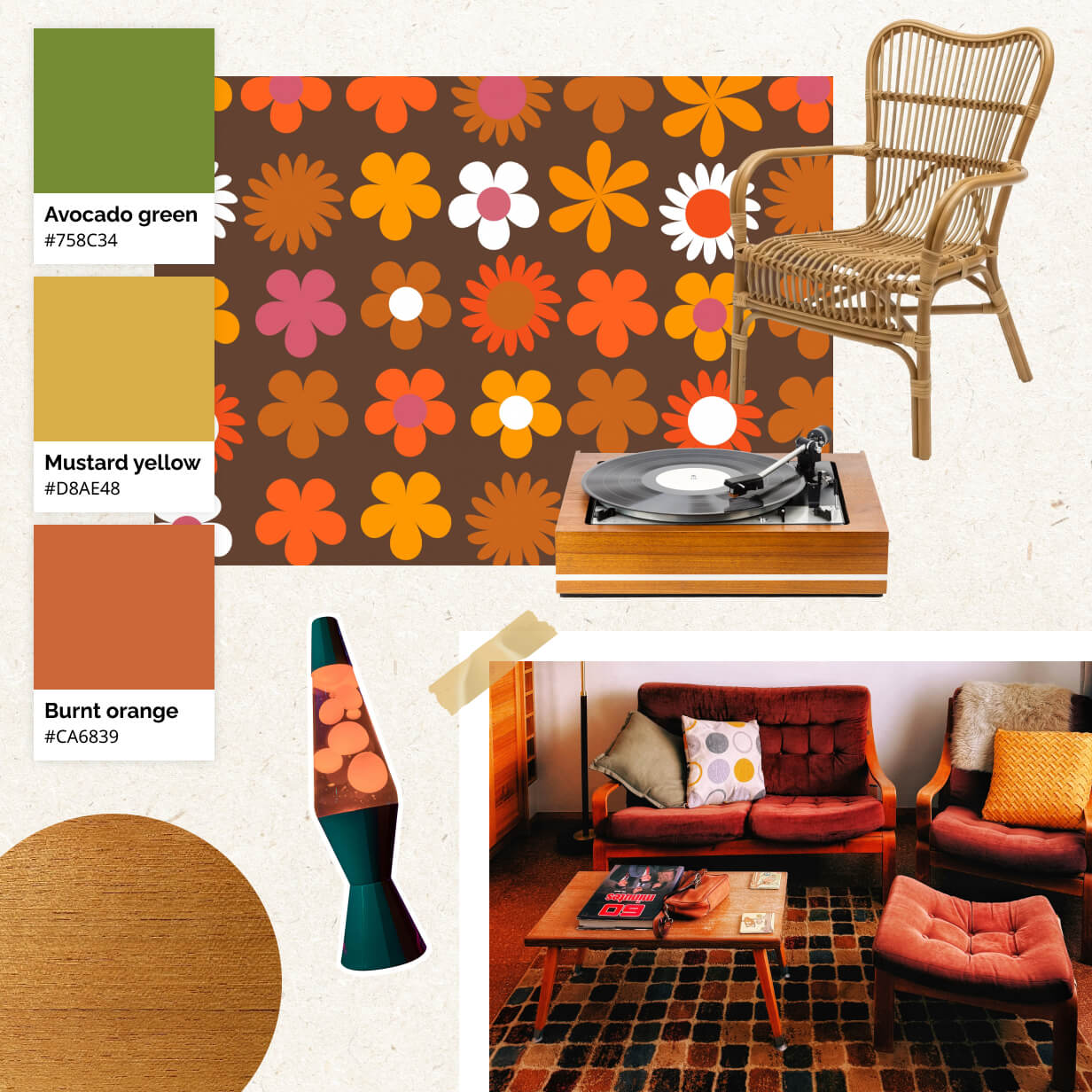
The 1970s brought warmth, colour and a relaxed bohemian feel into British homes. Living rooms often featured rich earthy shades including avocado green, mustard yellow and burnt orange.
Rattan and wicker furniture became popular across the decade, while bold floral patterns appeared on everything from wallpaper to soft furnishings. Warm teak furniture provided contrast against colourful décor, and iconic accessories such as lava lamps added a playful touch.
UK homes in the 1980s
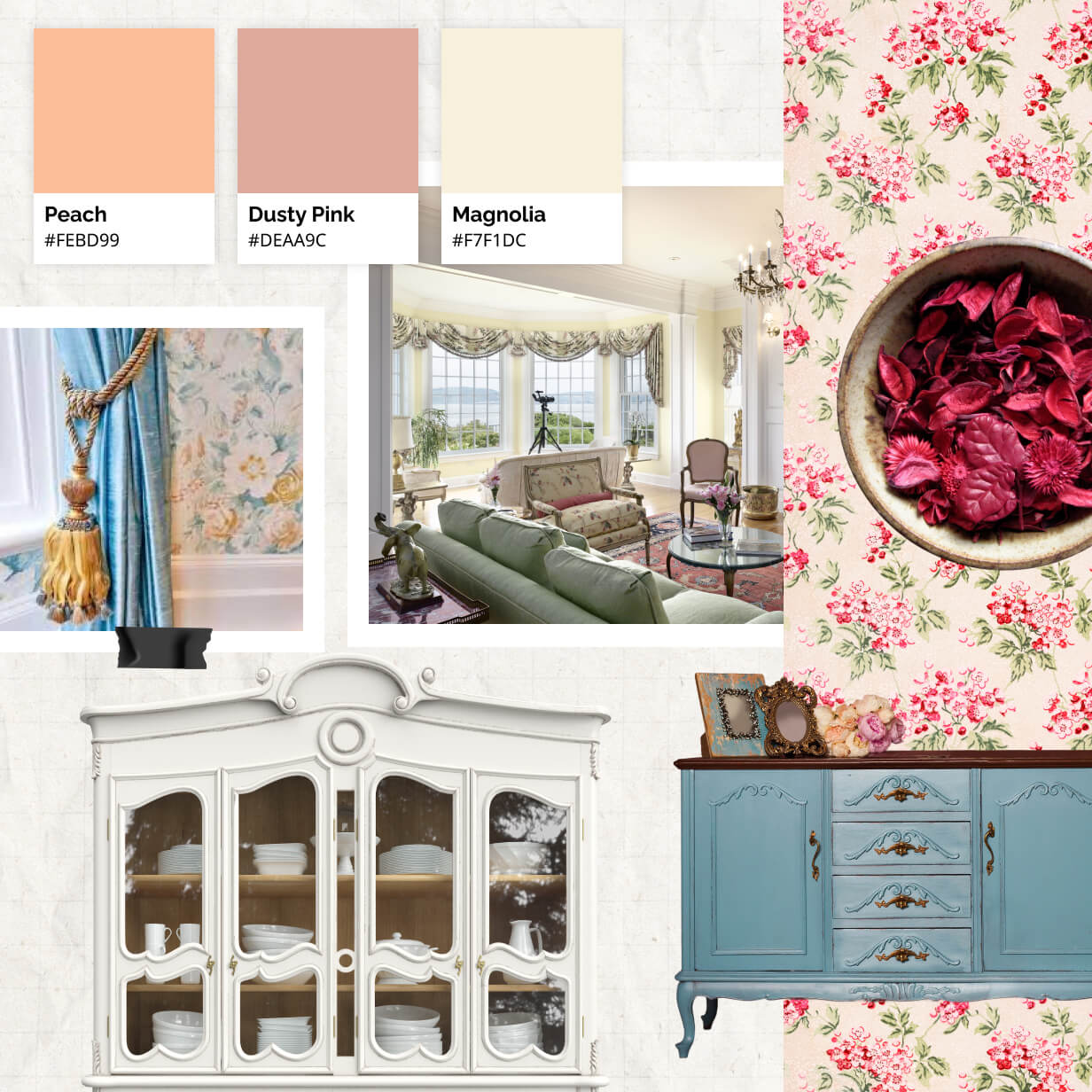
By the 1980s, British interiors had become more decorative and coordinated. Inspired by country house aesthetics, many homes embraced floral chintz fabrics, layered textiles and elegant furnishings that created formal yet comfortable spaces.
Popular colour palettes included peach, magnolia and soft floral pinks, often combined with dark mahogany furniture. Swags-and-tails curtains, glass display cabinets and decorative table lamps became common features, reflecting a desire to showcase treasured possessions and create a polished appearance.
Although chintz proved a somewhat controversial trend in our survey – 30% of Brits chose this as one of their most disliked trends – Georgina commented:
“I think chintz and floral fabrics are ready for a proper comeback. Beautiful florals can bring warmth, personality and that lovely British sense of eccentricity to a home. I'd happily use a floral armchair or pair of curtains in an otherwise simple room.”
UK homes in the 1990s
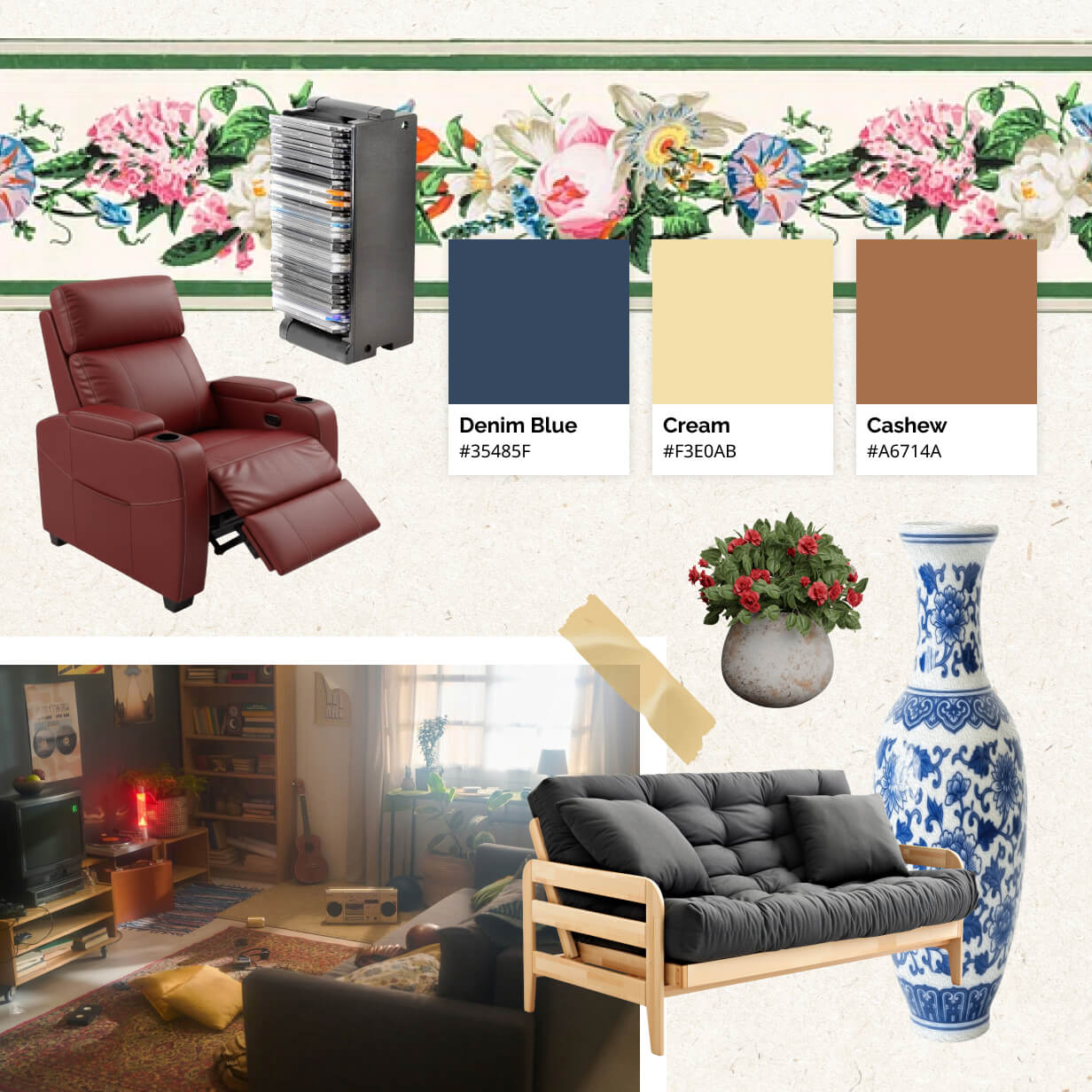
The 1990s saw British interiors move away from the bolder colours and decorative finishes of previous decades in favour of practicality and understated comfort. Warm neutral shades, including beige, cream and brown, created relaxed living spaces designed around everyday family life. Colour was often introduced through denim blue accents, patterned soft furnishings and decorative wallpaper borders.
Honey pine became one of the decade’s most recognisable furniture finishes, appearing on everything from coffee tables and television units to dining sets and chests of drawers. Futons were also a popular trend during the decade, offering flexible and versatile furniture.
UK homes in the 2000s
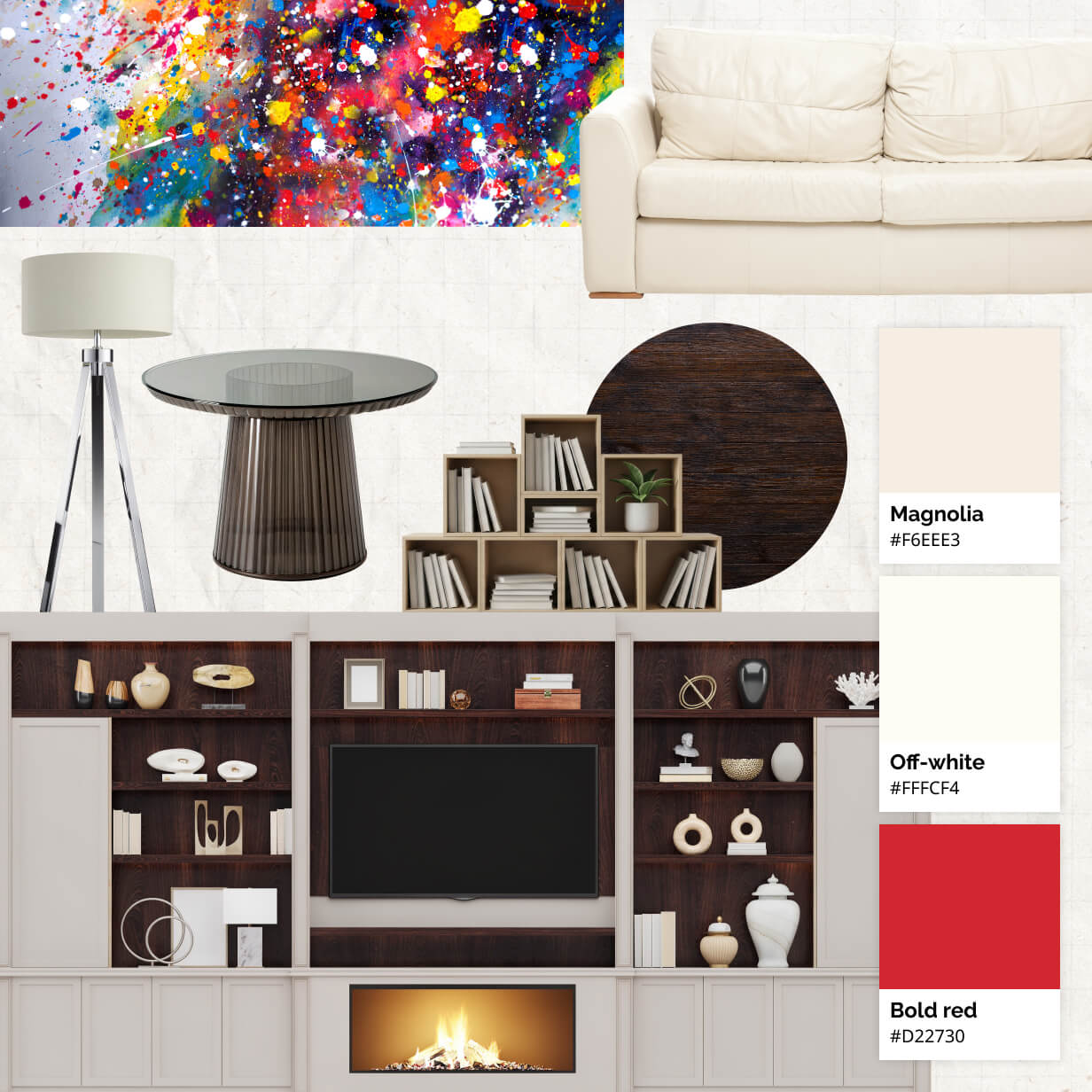
At the turn of the millennium, interiors became more technology-focused as televisions increasingly became the centrepiece of family living rooms. Magnolia walls dominated many homes, often complemented by warm off-white shades and bold red feature walls that added contrast.
Dark walnut furniture, leather sofas and substantial media units were also popular choices during this decade.
UK homes in the 2010s
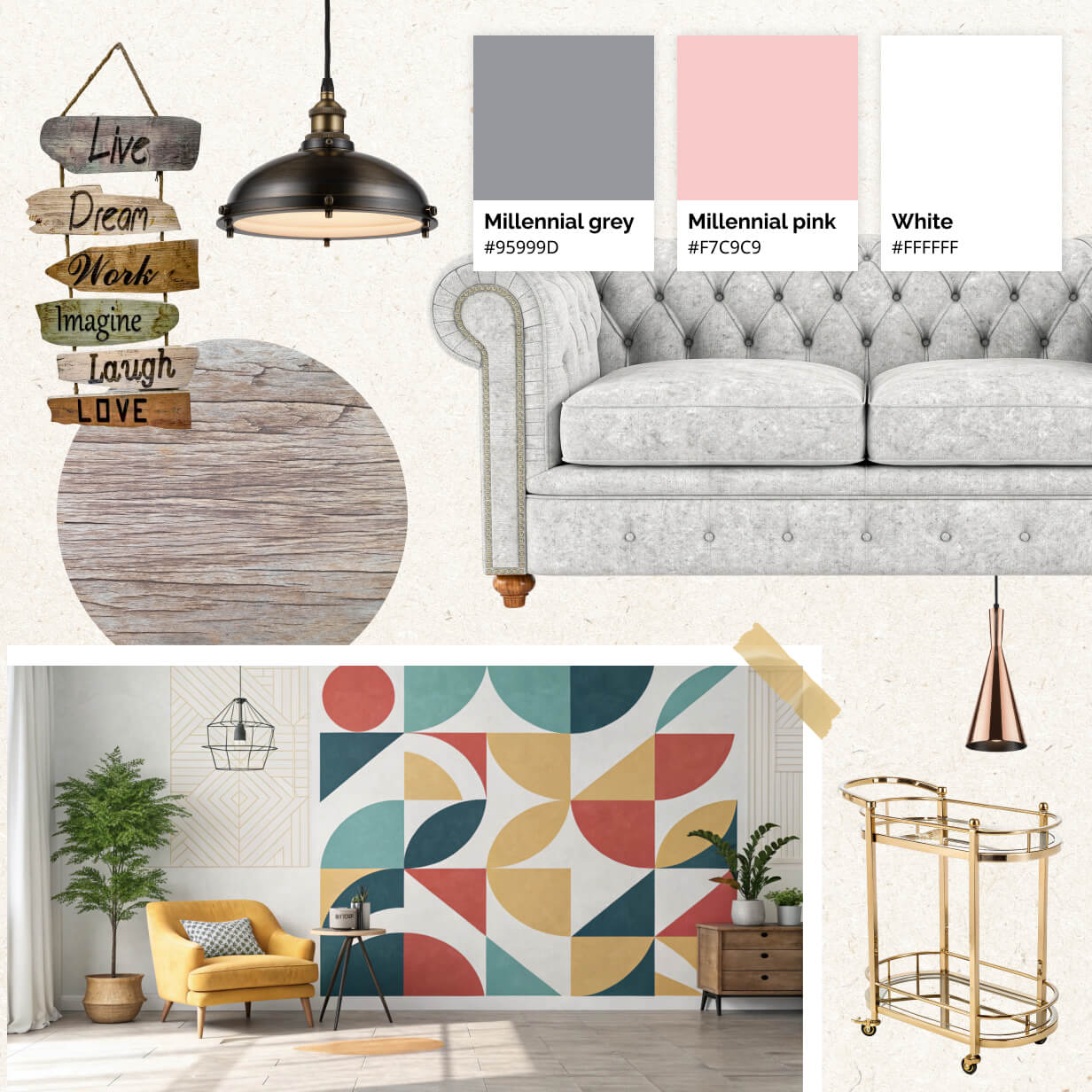
Few interior styles are as closely associated with a specific decade as the grey interiors of the 2010s. Influenced by social media and minimalist aesthetics, many homeowners embraced monochromatic colour schemes built around grey, white and soft pink tones.
Chevron patterns, geometric accessories and industrial-inspired lighting helped define the look, while grey-washed oak furniture and Chesterfield-style sofas became popular features. The style delivered a clean, curated appearance that photographed well online, although our survey shows that grey interiors have since become one of the UK's more divisive design trends, with 15% of Brits selecting it as one of their most disliked trends.
UK homes from 2020 onwards
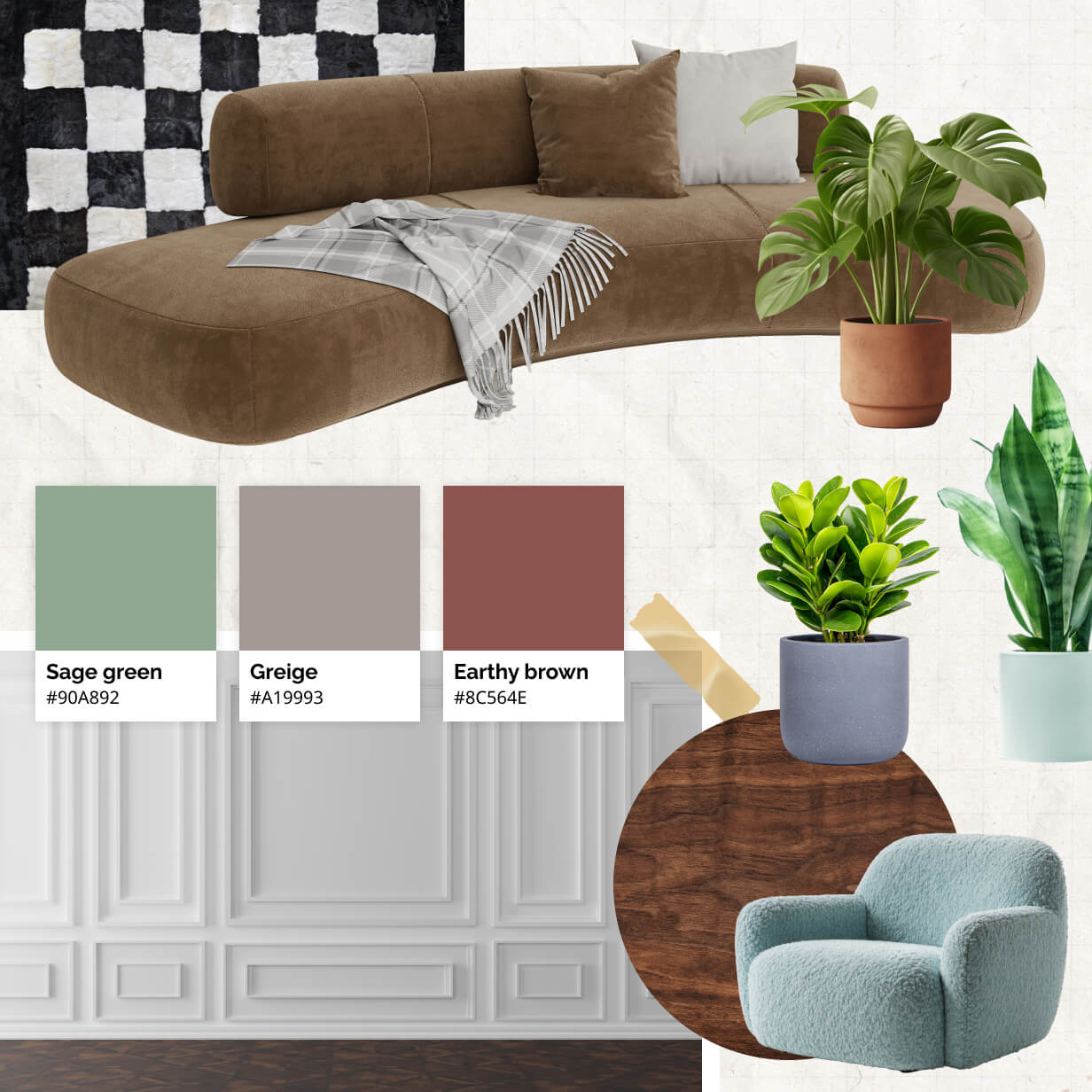
Today's interiors are increasingly focused on wellbeing, sustainability and connection with nature. The rise of biophilic design has encouraged homeowners to incorporate natural materials, organic shapes and greenery into their living spaces, with houseplants becoming particularly popular.
Sage green, earthy browns and greige tones have replaced the cooler palettes of the previous decade, while panelled walls, warm wood finishes and curved furniture help create a softer, more welcoming feel.
It’s no surprise that the 2020s were voted as the best decade for interior design, selected by a quarter of Brits.
How to make your home feel timeless, not trend-led
With trends often falling in and out of favour, many homeowners may feel stuck on knowing what to invest in, versus when to follow trends.
Georgina shared her advice for creating a home that feels like you, and not just your Pinterest board:
Decorate for yourself
“My biggest advice is don’t decorate for the algorithm. Decorate for yourself. Before buying something, ask yourself:
Would I still love this if I hadn’t seen it on Instagram?
“If the answer is no, leave it for a week and see whether you’re still thinking about it.”
Find your personal style
“Pay attention to what you naturally gravitate towards. Look at the clothes you wear, the places you love visiting, and the hotels and restaurants where you feel comfortable. Your interior style is often hiding in plain sight.”
Invest in the foundations
“For a timeless home, spend more of your budget on the things that are expensive or difficult to change, such as flooring, kitchens, bathrooms and good-quality furniture. You can then use paint, cushions, lamps and accessories to have fun with trends.”
Give your home room to breathe
“Don’t be frightened of empty space. A timeless home doesn’t need to be filled with whatever is currently fashionable. Give the beautiful things room to breathe.”
Be wary of overdone trends
“Anything that becomes too ubiquitous may eventually look dated. If every home starts looking identical because we’ve all saved the same Pinterest board, that’s usually a warning sign.
“Ultimately, the most stylish homes aren’t necessarily the ones with the latest trends. They’re the ones where you walk through the door and think, ‘Of course this is their home’.”
A new-build home gives you the freedom to create a space that feels completely your own. Whether you’re searching for a new home in Coventry, Suffolk, or elsewhere in the UK, our spacious, thoughtfully designed homes provide a blank canvas that can evolve with your style.
Our homebuying schemes can also help make your next move simpler. With part exchange homes, eligible homeowners may be able to sell their existing property to us and buy a new David Wilson home without the delays that can come with a property chain.
Related Articles
-
.jpg?w=10&hash=AA2B784FE1A57EDFEB8F760EBAA6F057)
Top Interior Colour Trends
Apr 26, 2024

.jpg?w=500&hash=D551EBC51EB89C7948BC390B55E6BF73| https://www.dwh.co.uk/-/media/group/barratt-homes/barratt-article-pages/david-van-dijk-3ltht2nxd34-unsplash-(1).jpg?w=550&hash=39201A18CBA30AAD0B4982927F3418E4| https://www.dwh.co.uk/-/media/group/barratt-homes/barratt-article-pages/david-van-dijk-3ltht2nxd34-unsplash-(1).jpg?w=600&hash=53132FD5155DB4EB46A79BFB511B5615| https://www.dwh.co.uk/-/media/group/barratt-homes/barratt-article-pages/david-van-dijk-3ltht2nxd34-unsplash-(1).jpg?w=650&hash=3154D555BF1BF2DCD3C4936176684B3C| https://www.dwh.co.uk/-/media/group/barratt-homes/barratt-article-pages/david-van-dijk-3ltht2nxd34-unsplash-(1).jpg?w=700&hash=20A32086C3A43ABBE5E32C68A9CDD684)
