.jpg?w=100&hash=262E3B439F983CA2C7836AF02A6C4EDE| https://www.dwh.co.uk/-/media/group/david-wilson-homes/dwh-article-pages/wp-content/uploads/2025/12/header-illustration-(1).jpg?w=200&hash=B05013565D3EAED584AD8B72723D0774| https://www.dwh.co.uk/-/media/group/david-wilson-homes/dwh-article-pages/wp-content/uploads/2025/12/header-illustration-(1).jpg?w=300&hash=EC36502C011E95E6A0F6E4620F33A26A| https://www.dwh.co.uk/-/media/group/david-wilson-homes/dwh-article-pages/wp-content/uploads/2025/12/header-illustration-(1).jpg?w=400&hash=C32D4F3AEE567AE4CCB94EA9756F86BB| https://www.dwh.co.uk/-/media/group/david-wilson-homes/dwh-article-pages/wp-content/uploads/2025/12/header-illustration-(1).jpg?w=500&hash=248883570D178BA4E09D3C0D806DEDA6| https://www.dwh.co.uk/-/media/group/david-wilson-homes/dwh-article-pages/wp-content/uploads/2025/12/header-illustration-(1).jpg?w=600&hash=7468D77F3C21814C688672B97D8CEB76| https://www.dwh.co.uk/-/media/group/david-wilson-homes/dwh-article-pages/wp-content/uploads/2025/12/header-illustration-(1).jpg?w=700&hash=545F7F885F9FB2B4DBEA3E244DB31717| https://www.dwh.co.uk/-/media/group/david-wilson-homes/dwh-article-pages/wp-content/uploads/2025/12/header-illustration-(1).jpg?w=800&hash=C843E8BBD72FBDC991CE08D709499C2A| https://www.dwh.co.uk/-/media/group/david-wilson-homes/dwh-article-pages/wp-content/uploads/2025/12/header-illustration-(1).jpg?w=900&hash=63334AFAE4DEACC86CD08E928858B8CF| https://www.dwh.co.uk/-/media/group/david-wilson-homes/dwh-article-pages/wp-content/uploads/2025/12/header-illustration-(1).jpg?w=1000&hash=73E018CE3B90FDCB15A7606A5051D0A3| https://www.dwh.co.uk/-/media/group/david-wilson-homes/dwh-article-pages/wp-content/uploads/2025/12/header-illustration-(1).jpg?w=1100&hash=B688B294442750B73B4EA852CFD420F8| https://www.dwh.co.uk/-/media/group/david-wilson-homes/dwh-article-pages/wp-content/uploads/2025/12/header-illustration-(1).jpg?w=1200&hash=44B9736FDE1C6DA776CED47AC0DFA365)
The UK’s home cleaning habits
From the survey, we uncovered that on average, we spend 3.5 hours a week cleaning – that’s 181 hours a year, or the same as losing more than a week of your life to dusting, scrubbing, and vacuuming.
This figure, however, changes significantly depending on location. Depending on where you live, the yearly number of hours spent cleaning can shoot way up… or drop right down.
Northern Ireland takes the top spot for the cleanest homes, with residents putting in a huge 246 hours a year on chores. That’s nearly 70 hours more than the UK average.
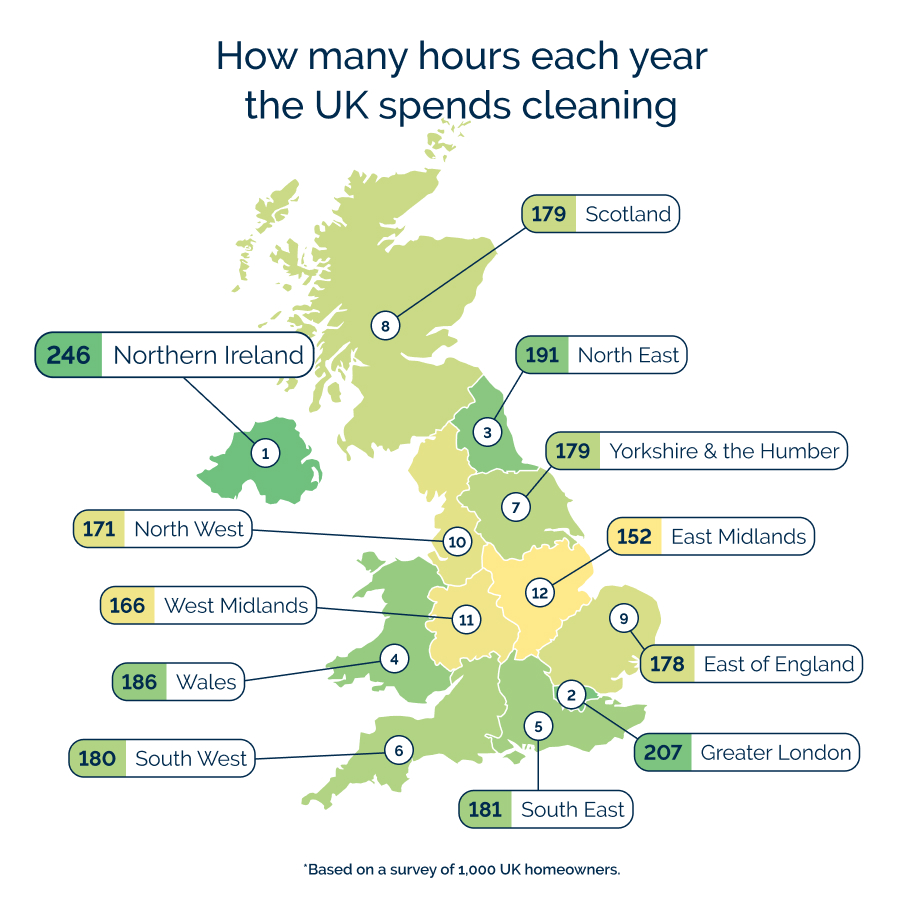
Close behind are homes in Greater London at 207 hours, homes in the North East with 191 hours, and homes in Wales with 186 hours.
In the middle of the pack, South West residents land just shy of the national average at 180 hours, with Scotland, Yorkshire & Humber, and the East of England not far behind.
But some regions are slacking when it comes to keeping things spotless.
Homes in the North West manage only 171 hours, while those in the West Midlands fall to 166 hours.
At the very bottom? The East Midlands, where people spend just 152 hours a year cleaning, nearly 100 hours less than those in Northern Ireland.
However, it doesn’t stop there.
As for the reasons why people put off cleaning jobs in the home, lack of motivation is the biggest barrier for over half of Brits (54%), followed by a lack of time (34%) and a lack of knowledge on how to clean something (6%). The remaining respondents were either put off by the cost of cleaning supplies (3%) or hire someone to do their cleaning (3%).
Household cleaning tasks, room-by-room
When it comes to the different rooms of the home, some are notably easier to keep clean than others.
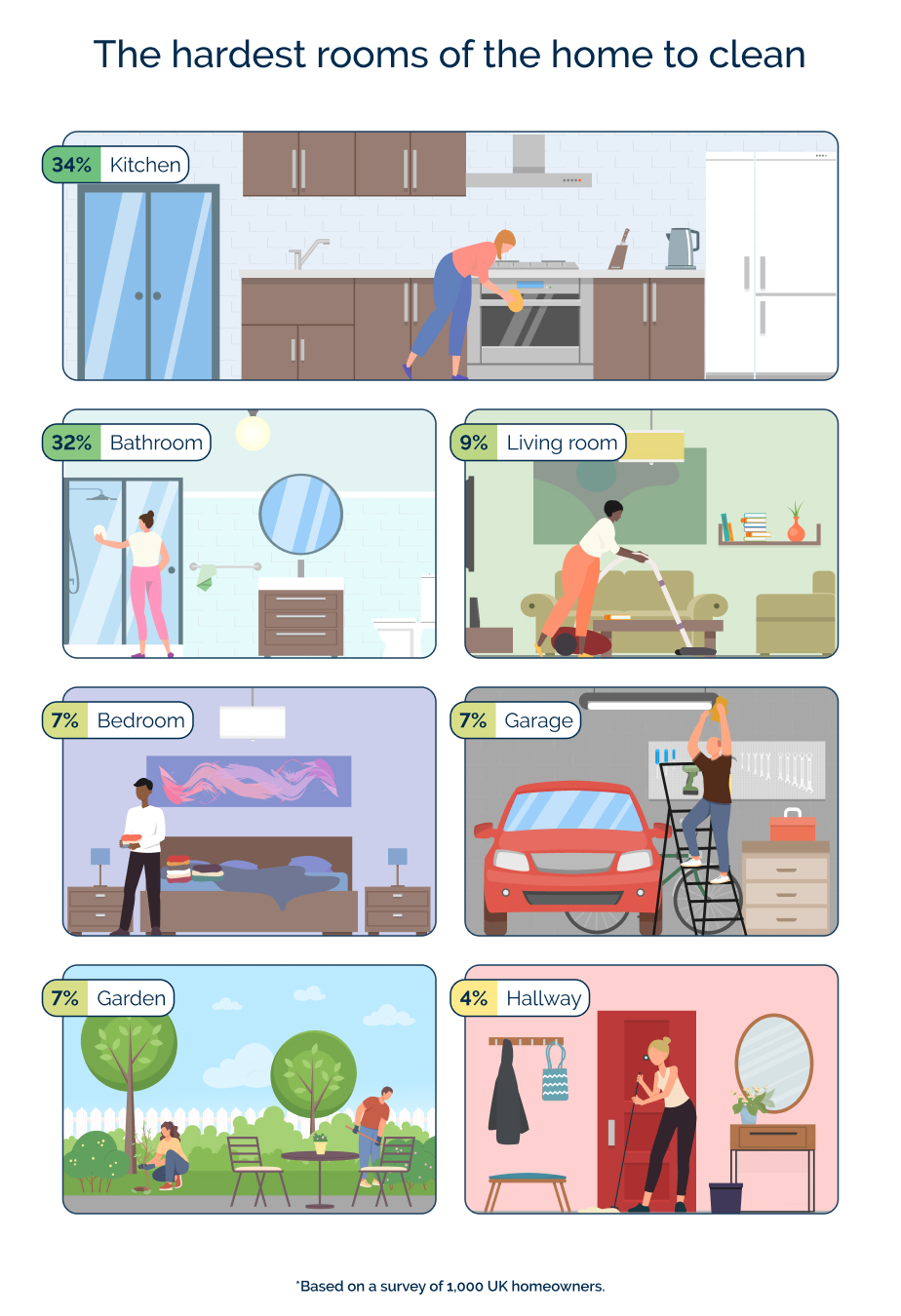
Surveying homeowners, we found two clear areas where Brits struggle most to keep things clean: the kitchen (34%) and the bathroom (32%).
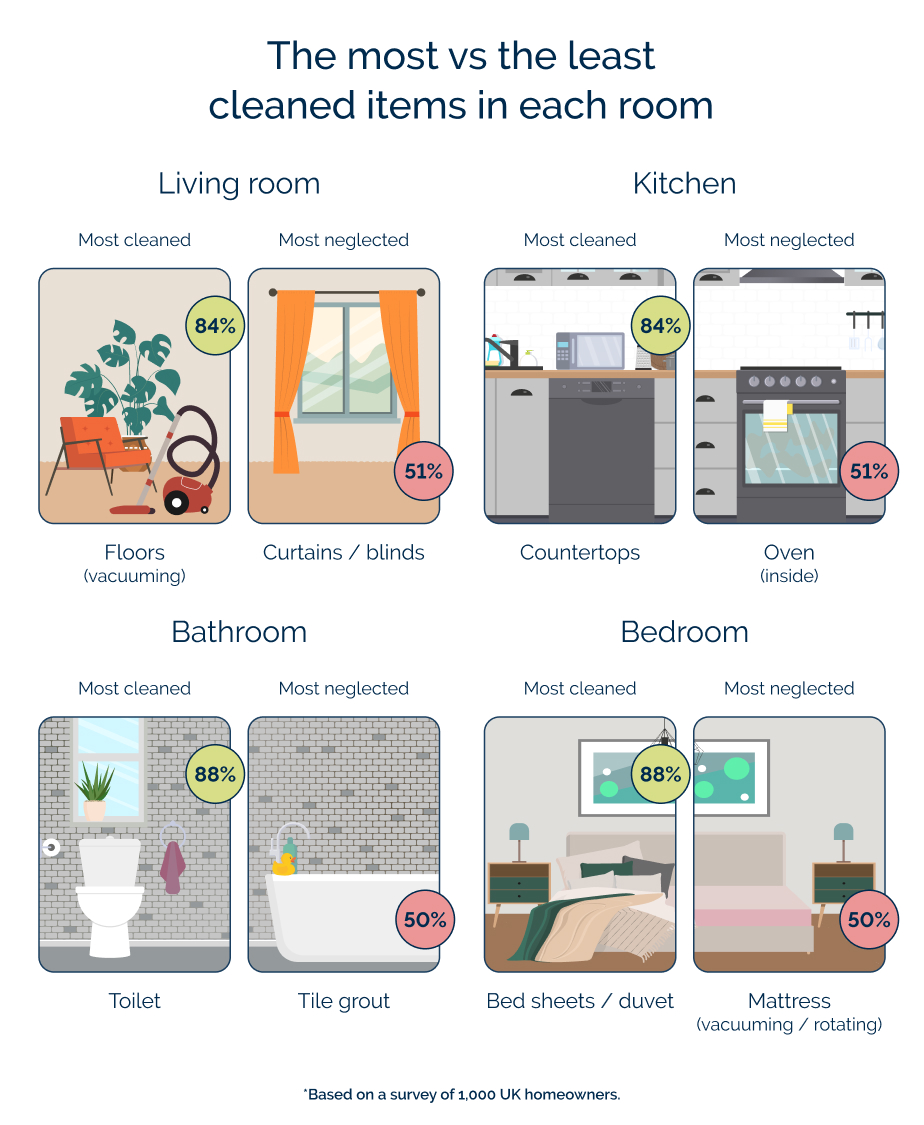
Taking a closer look at each room in the home, we’ve revealed which areas Brits are cleaning the most frequently and which areas they are neglecting.
Kitchen cleaning tasks
Sarah commented on the findings:
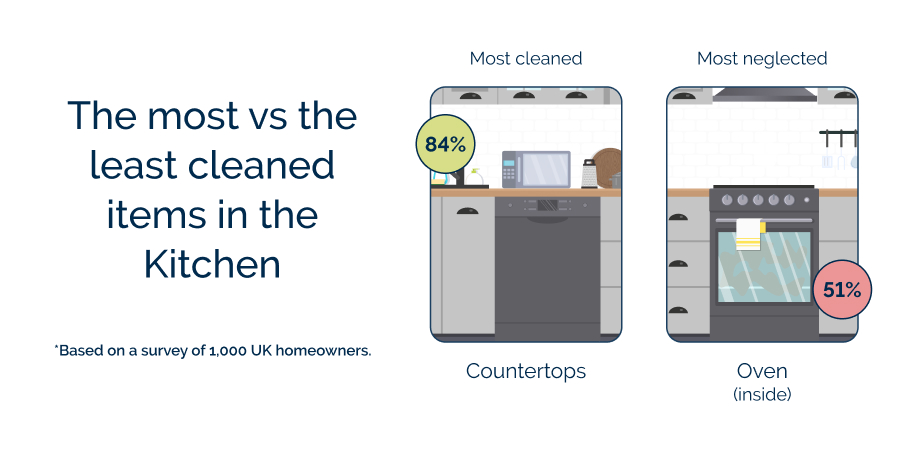
It’s clear that UK households are great at keeping up with everyday kitchen chores, but when it comes to those deeper cleaning jobs, especially the ones involving appliances, they often get neglected. Luckily, a few clever tricks can make these tasks quicker, easier, and cheaper.
For cleaning the oven, you have two choices. Use a store-bought cleaner or mix baking soda and water to form a paste. Both usually involve spreading the mixture all across the oven's interior surfaces, avoiding any electrical components or the heating elements.
After the recommended time, use a damp cloth or non-abrasive sponge to wipe away the cleaner and grime. Always make sure to wear gloves and ensure good ventilation.
For cleaning out the fridge, you first need to disconnect the power before emptying the contents. You can wash any removable parts in soapy warm water and use a cloth dipped in a solution of white vinegar and water to wipe down the interior surfaces. Dry with a cloth before re-stocking.
Bathroom cleaning tasks
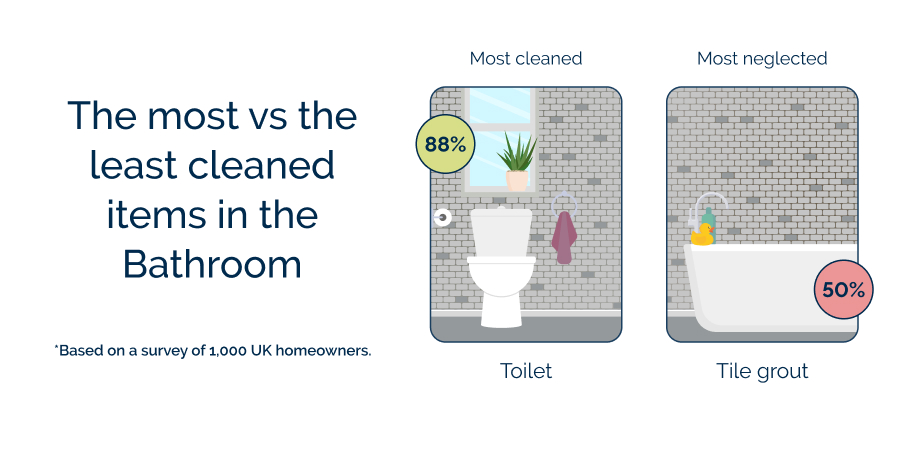
Sarah remarks:
Bathrooms can be particularly difficult to keep clean thanks to the high-humidity environment that promotes the build-up of soap scum and mould. It also has a variety of different surface materials from tiles to chrome and even glass, each one requiring a slightly different approach.
For tile grout cleaning, make a paste solution using bicarbonate of soda and a tiny bit of water and apply it to the grout with a toothbrush. Leave to soak in for an hour or so, then rinse off with warm water. You can also use lemon juice to clean tile grout by using the same method.
For polishing mirrors and windows, dilute a capful of white vinegar with some warm water and a squirt of washing-up liquid. Then use a microfiber cloth in a circular motion to give it a good scrub, before wiping off any excess water and giving it a final once-over with a dry microfiber cloth.
Living room cleaning tasks
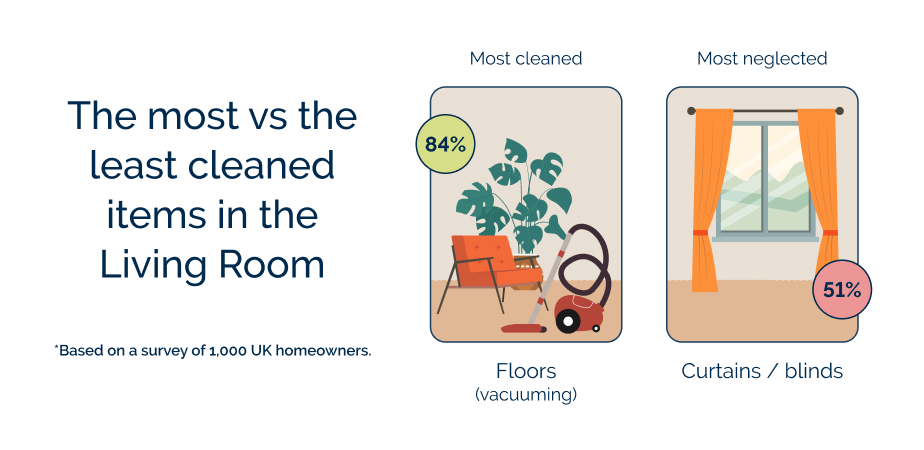
Sarah adds:
We can definitely sympathise with UK homeowners when it comes to cleaning slat blinds and curtains, as without prior knowledge and hacks, it can be a difficult task.
Slat blinds should be hoovered prior to being wiped down, as this will remove most of the dust, therefore making the wiping down a lot easier and less time-consuming. After this, they should be wiped down with either a dry cloth if it’s light dust or a damp cloth containing a small amount of water/washing-up liquid solution.
Curtains or material blinds can be washed in the bath using washing powder/stain remover. They then should be left to soak before being dried on the line - it’s best to do this during the summertime.
Again, not only will they look clean, but it will help your home smell nice and fresh, too.
Bedroom cleaning tasks
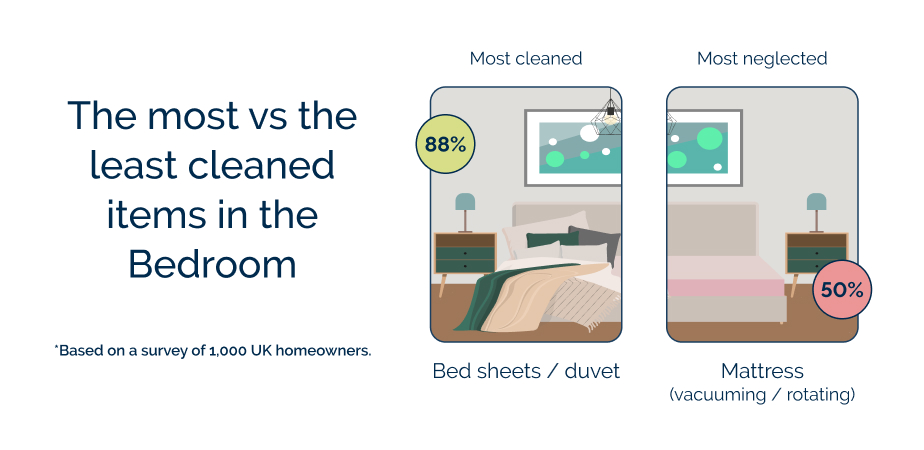
As Sarah points out:
There are so many benefits to having a good clear out of cupboards and wardrobes to free up some space in your home, but often, many of us are put off knowing where to start.
Doing one drawer or cupboard every day over a few weeks enables you to be more thorough, and it also seems a lot more manageable than trying to attempt to declutter everything all in one go.
The best approach is to be brutal and get rid of anything that you haven’t used or worn in the past year. Once you have determined what you would like to keep, you should then hoover out and wipe down the area.
I recommend using storage boxes or containers to keep things in, as this allows you to pull the boxes or containers out in order to clean more easily and effectively. Having things stored in this way will make you more likely to clean those areas on a regular basis.
The UK’s most hated cleaning jobs
Cleaning the oven tops is the UK’s most loathed cleaning task in the home, with a third of respondents (33%) choosing this. This is followed by scrubbing the toilet (16%) and cleaning bathroom tile grout (13%).
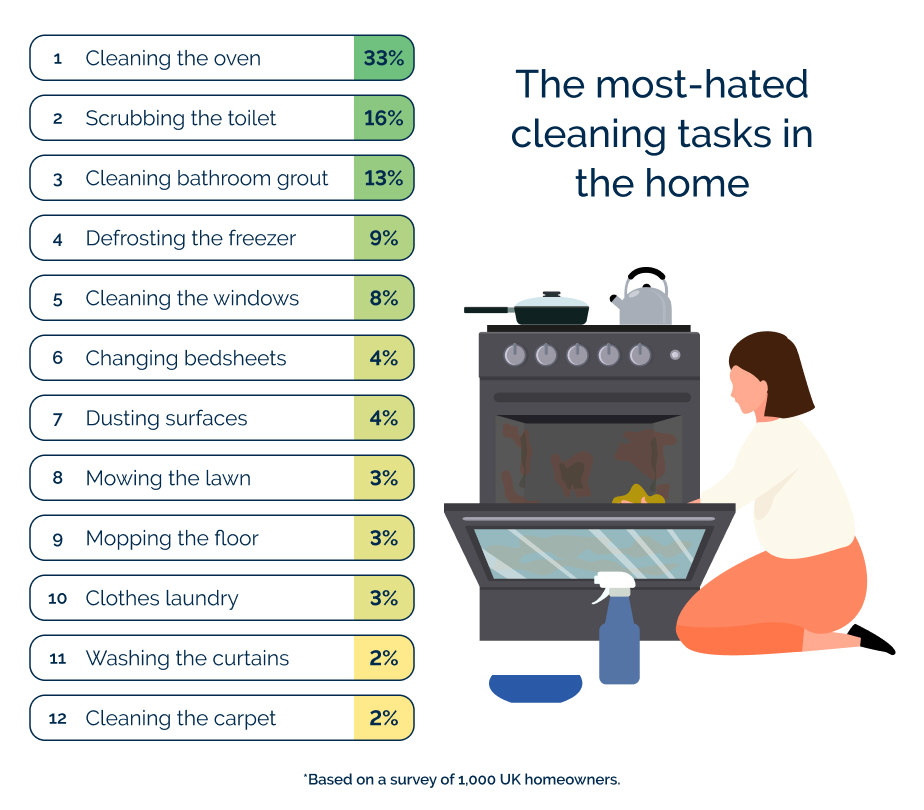
Other notable mentions from the top ten list include defrosting the freezer (9%), cleaning the windows (8%), dusting down surfaces (4%), and washing the curtains (2%).
For Gen Z homeowners (aged 18-28), scrubbing the toilet comes out on top, whereas for millennials (29-44), cleaning the oven tops their list. Cleaning the oven also tops the list for Gen X (45-60) and boomer (61-79) homeowners, followed by cleaning the windows.
The UK’s most-asked cleaning queries
In addition to the survey, we analysed UK search data from the last 24 months to uncover the most-asked ‘How to clean’ queries in Google. We then showed these to Sarah, who provided some expert insights on the top five queries:
1. ‘How to clean a washing machine?’ (22,200 average monthly searches)
Dirt and mould can build up in your machine, which can affect the cleanliness of your clothes. You should aim to clean your washing machine once a month using a hot wash setting to help remove limescale build-up.
You can either use specialised cleaning products or, for a homemade option, pour a little white vinegar into the detergent drawer alongside sprinkling a small amount of soda crystals into the machine drum.
2. ‘How to clean mould off walls?’ (8,100 average monthly searches)
Small amounts of damp and mould can be common due to the moisture in our homes – especially during the colder winter months. It’s important to treat any mould build-up as soon as possible to prevent the spores from spreading and causing wider issues.
A common method is to mix one part bleach with four parts water and use a cloth to gently scrub the surface clean. Baking soda can also be used mixed with water; this is particularly effective to use after the bleach method to help prevent mould from growing back.
Indoor mould doesn’t only ruin the appearance of your house but is also detrimental to your health. Studies have shown that mould is bad for your health, potentially causing headaches, breathing problems and triggering asthma.
3. ‘How to clean an air fryer?’ (8,100 average monthly searches)
One of the newest kitchen gadgets, air fryers need to be cleaned at least once a week to prevent a build-up of grease and residue. The removal basket and tray can easily be cleaned after each use using hot soapy water.
The interior of an air fryer can be trickier to clean. A good method is to place a small bowl of soapy water into the drawer and turn it on at a low temperature for several minutes. The produced steam will help loosen any grease and grime that can be wiped away using a damp cloth.
4. ‘How to clean a mattress?’ (6,600 average monthly searches)
Although people regularly clean their bedding, mattresses often go neglected. It is recommended that mattresses be cleaned every six months to help remove any accumulated dead skin cells, dust, and other allergens.
Regular maintenance includes vacuuming, rotating the mattress, and cleaning spills immediately to prolong its lifespan and improve sleep quality.
5. ‘How to clean a carpet?’ (5,400 average monthly searches)
Carpets throughout the home are heavily used and therefore should be vacuumed at least once a week. Deeper cleans such as shampooing or steam cleaning should be carried out once a year to help prevent dust build-up, stains, and odours.
Baking soda is great for stain removal and also works as an odour neutraliser – perfect for pet accidents. For this, sprinkle baking soda onto the carpet and stained areas, leaving it to absorb for at least 15 minutes. Then, vacuum the area to remove the debris.
The rest of the top ten queries were:
- ‘How to clean a sofa?’ (4,400 average monthly searches)
- ‘How to clean limescale from a toilet?’ (4,400 average monthly searches)
- ‘How to clean a kettle’ (3,600 average monthly searches)
- ‘How to clean a shower head?’ (3,600 average monthly searches)
- ‘How to clean a dishwasher?’ (3,600 average monthly searches)
The best natural cleaning products
Surveying homeowners, we uncovered that just over a third (36%) now use natural cleaning solutions instead of store-bought chemical alternatives.
As Sarah points out, using these throughout the home can have a wide variety of benefits, as well as being cost-effective.
Baking soda for cleaning
Bicarbonate of soda is a versatile natural cleaner that removes grease and odours throughout the home.
In the kitchen, it is effective for sinks, ovens, countertops, and flooring. Meanwhile, in the bathroom, it can be used to help clean tile grout, stained toilet bowls, and soap marks in the shower/bath.
Sprinkle it on a damp cloth to wipe surfaces or mix with a little water for a paste to tackle tough stains – let it sit, scrub, and rinse.
To remove odours, leave an open container in areas like the fridge or sprinkle on carpets and fabrics, then vacuum after letting it sit overnight.
White vinegar for cleaning
White vinegar is a powerful natural cleaner and deodoriser due to its acidity. It removes stains and odours from surfaces like glass, countertops, and floors.
You can create an all-purpose spray by mixing equal parts white vinegar and water, or use it undiluted for tougher jobs like removing soap scum and killing mould spores.
It can also be combined with bicarbonate of soda to create a chemical reaction. This fizzy reaction is particularly effective for cleaning household drains.
Lemon juice for cleaning
Lemon juice is a natural alternative to vinegar and is especially effective against limescale on showerheads, taps, and kettles, common issues in hard water areas.
Simply mix one part lemon juice with four parts water in a spray bottle to create an all-purpose surface cleaner. Spray the solution onto the limescale-affected surfaces, let it sit for up to an hour, then scrub and rinse.
It also removes odours: place a cut lemon in the fridge to absorb smells or rub half a lemon on wooden chopping boards to eliminate food odours.
Household cleaning job checklist
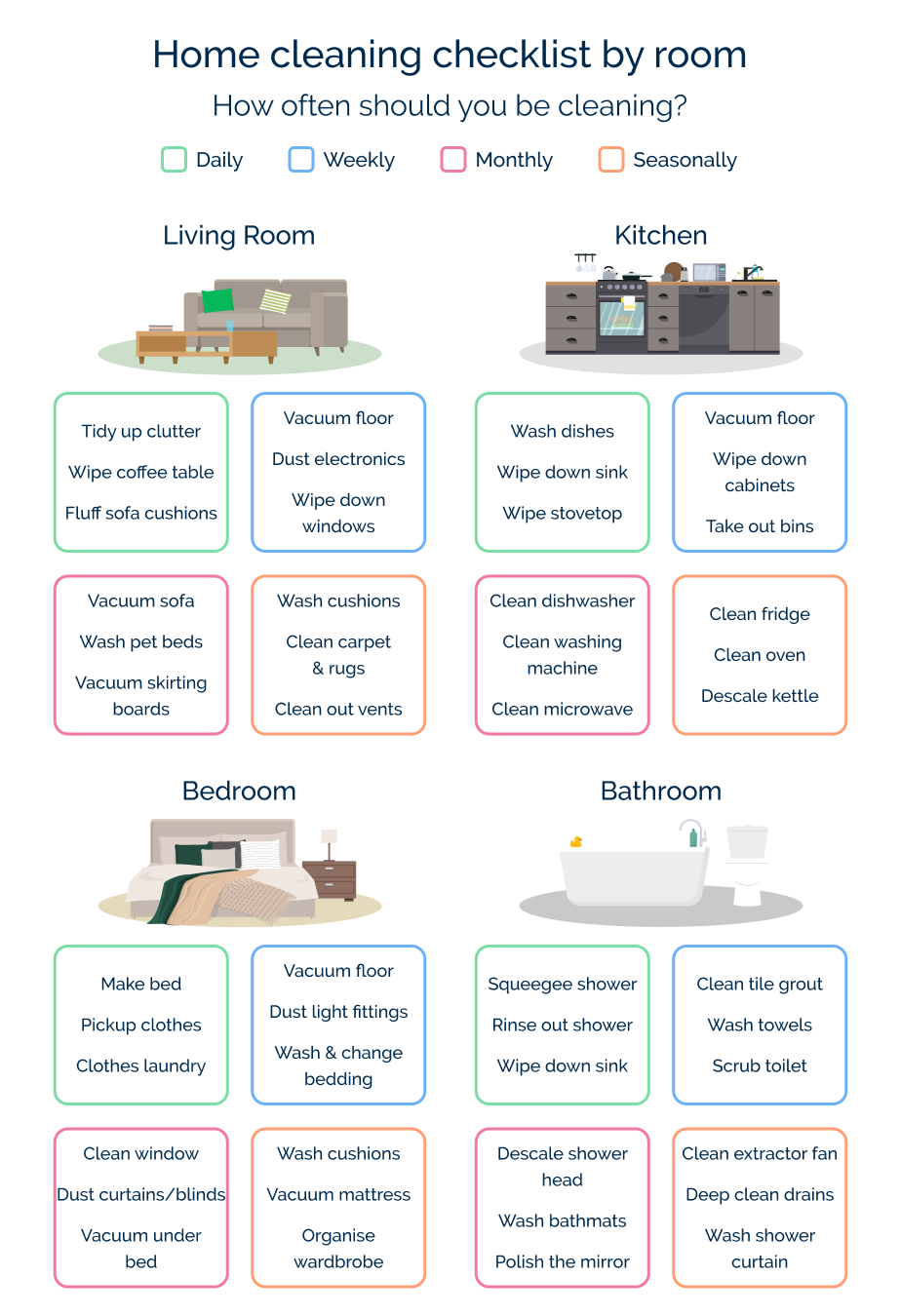
Maintaining a clean home
Setting aside 5-10 minutes a day to give your home a quick spruce up will help to keep it looking its best for longer. Another great way to keep track is to create a cleaning schedule to refer to.
You can refer to this every week and month when it’s time to clean different aspects of the home. You might want to do this in a note on your phone, pen and paper, or a magnetic blackboard stuck to your fridge.
With these tips, keeping your space fresh and organised doesn’t have to feel overwhelming; it can become part of a simple, satisfying routine, and the whole family can get involved.
Whether you’re moving into a brand-new home or giving your current place a sparkling reset, a little consistency goes a long way.
If you’re dreaming about your next chapter, why not explore our range of new build homes across the UK and discover brilliant offers to help you move.
Methodology
David Wilson Homes surveyed 1,000 UK homeowners to uncover their home cleaning habits and attitudes towards cleaning tasks. Google Search data from 2024 and 2025 was also gathered, looking at the most searched for ‘How to clean X’ queries.
Related Articles
-

How to declutter your home
May 14, 2025 -

10 common cleaning mistakes to avoid
Mar 10, 2023

