Top tips to find that fur-ever home for you and your pet
While moving home is an exciting time, it can be a stressful experience for your pets. That’s why it’s important to make them feel at ease during the transition.
Surveying 1,000 UK pet parents and homeowners, David Wilson Homes and the RSPCA have created an expert guide to moving home with pets, including tips on how to pet-proof your new home, ensuring it’s safe for your furry friend.
As Dr Samatha Gaines from the RSPCA’s Companion Animals Team explains:
“Moving house can be an anxious time for everyone involved, including your pet, so it’s important to plan ahead and take time to think about the best way to move your animals and minimise stress.”
Choosing the pur-fect home
According to our recent survey of independent homeowners, nearly two-thirds (62%) have relocated with their pets, turning the big move into a four-legged family affair.
When it comes to the type of homes preferred by pet owners, detached homes (38%) and semi-detached (37%) lead the way, due to having more space.
Most people also prefer to stay close to familiar turf, with nearly half (48%) of pet parents moving less than 10 miles from their current location, and a further 30% stretching the distance to within 50 miles.
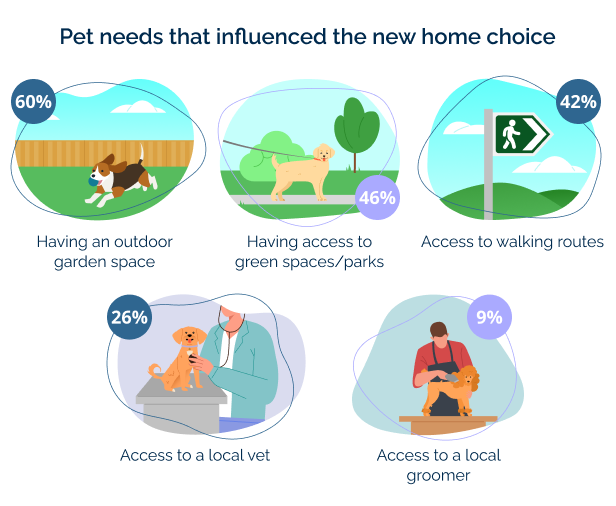
When it comes to must-haves in a new home, outdoor space is unsurprisingly the most important factor, with a garden topping the wish list for 60% of pet owners.
Local green spaces and parks (46%) and access to nearby walking routes (42%) were also high on the list of requirements. Alongside other pet-friendly perks such as easy access to a vet (26%) and a nearby groomer (9%).
Preparing for the move
Preparing pets for the move is just as important.
Half of owners (50%) brought along their pets’ favourite toys and familiar items for comfort, while nearly a quarter (22%) took a proactive approach by introducing their pets to the new home ahead of the big day.

As for how pets handled the move, a third (32%) of owners said their animals were calm and relaxed. That said, some pets showed signs of stress, with 27% appearing anxious, and 24% becoming more vocal or clingy.
To help make the transition as smooth as possible, Dr Gaines has shared some helpful tips to help navigate the moving home period with your pet:
Before moving
- Plan out the packing
As much as possible, keep your pet away from all the commotion of the packing, unpacking, moving, and cleaning to help reduce stress. Animals should be moved last to minimise disturbance.
Moving can be hectic, so it's important to keep your pet's essentials close at hand. Set aside items like their favourite toys, food, and any necessary medications in a clearly accessible spot. This way, you'll have no trouble finding them on moving day.
Once you arrive at your new home, you can help keep your pet calm and occupied with a treat, activity/puzzle feeder, or a beloved toy.
- Update pet records and identification
When you move, you’ll need to update your pet’s records with your new address and contact details. Here are some important steps to take.
Contact the vet
If you’re staying in the same area and have chosen to stick with your current vet, you’ll need to inform the practice of your move so that any correspondence will go to your new address.
Notify your pet insurance provider
Vet fees vary around the country, so the region you live in will impact the price of your pet insurance policy. For this reason, you should notify your insurance provider when you move home. Your insurance could be invalid if you fail to do this.
Update your pet’s collar tag
If your pet goes missing, having the correct contact information on their collar tag will ensure they’re returned to you quickly and safely. If your address or home phone number is on the tag, you’ll need to update this information when you move.
- Prepare your pet
Relocating with pets can be stressful for them, but you can help ease their transition by gradually introducing packing items such as cardboard boxes. Associating these new objects with positive experiences can help minimise their stress of the move and build a sense of familiarity.
Also, ensure your pets are fit to travel, and if in any doubt, contact your vet. If you own an animal that is pregnant, poorly, elderly or very young, seek advice from a vet before transporting them.
Moving day
- Plan out your route
This helps to minimise journey time and maintain suitable comfort and environmental conditions en route. Never leave an animal unattended in a vehicle.
Ensure your vehicle is kept cool and well-ventilated and avoid travelling during the hottest parts of the day. During the journey, check your pets regularly and give them frequent breaks.
- Use a suitable carrier
Animals need to be transported in suitable carriers, and dogs should be adequately secured. When transporting your pet in a crate or container, make sure they have enough room to sit and stand up at full height, turn around easily and lie down in a natural position.
It’s a good idea to get your pet comfortable with being in a carrier prior to the move, if this is something they are unfamiliar with. A good way to do this is to leave the carrier out in the home leading up to the move so they can explore it themselves.
- Lean on support
Each pet has unique needs, so it's essential to choose a moving approach that suits them best. If your pet is especially anxious, consider having a trusted friend or family member care for them on moving day - provided your pet is familiar and comfortable with both the person and their home.
This helps prevent stress from loud noises or unfamiliar faces and keeps your pet safe while heavy furniture and boxes are being moved. It also helps to prevent pets from escaping if there is a lot of movement in and out of doors.
Settling in
- Keep the same routine
When you’re in the new house, try to keep to the same routine as you had in your previous home. This includes the same feeding times, walking times, and playtimes.
Cats who have previously had outdoor access need to be kept indoors for at least two to three weeks before going out so they understand the house is now their new territory. They could get into serious danger trying to return to their previous home.
Speak to your vet about using a suitable pheromone product for your dog, cat or rabbit, which may help to make them feel more secure and settled in their new home.
- Unpack your pet first
It’s beneficial if owners can make the new environment as safe and interesting as possible to help their pets feel ‘at home,’ for example, lots of toys, hiding areas, comfy beds, food and water and plenty of reassurance.
Try to spend as much time as you can at home with your pet during the initial days to help reduce their stress and confusion. Gradually increase the time they spend alone in the home.
It’s important to create a positive and welcoming atmosphere in the new home by giving your pet plenty of attention. Engage in playtime and offer tasty treats to help them feel comfortable and secure.
Pet-proofing your new home
So what steps are people taking to get ready to welcome their pet into a new home?
From our pet-owner survey, we found out what measures owners have put in place and what household rules and restrictions are enforced.

The most popular pet-proofing method was to remove any non-pet-friendly plants from the home, with two-fifths (40%) of homeowners implementing this.
This was closely followed (39%) by moving any hazardous items out of paw’s reach, such as cleaning supplies and washing detergents.
As for the hardware, a third (30%) of homeowners invested in a baby gate to keep their pets safe from accessing certain areas of the home, with a further 28% encasing any electrical cables in protectors.
A further 22% also invested in secure lids for their household waste bins, with 19% also investing in pet-safe furniture covers to protect their soft furnishings.
Exploring the pets on furniture debate further, our poll found that three-quarters (74%) of pet owners allow their pets on the living room sofa, but only half (52%) allow their pets on the bed.
As for the home's flooring, 19% opted to invest in a rug to cover any areas of wooden flooring, while 15% replaced any laid carpet with laminate flooring for cleaning ease.
Despite many creating a pet-friendly space, some homeowners still set boundaries: a quarter (27%) of homeowners keep the bedroom and bathroom access restricted, with an additional quarter limiting kitchen access.
However, half of pet owners allow their furry friends to freely roam around the home as they please.
Five ways to pet-proof a home
Sam Wood, Sales Director at David Wilson Homes, has shared five easy methods to help pet-proof a new home:
1. Remove any hazardous objects
Several varieties of house plants are toxic to pets, including popular plants such as snake plants, aloe vera, and sago palms, as well as flowers such as lilies and poinsettias. Common food items such as coffee, chocolate, and grapes are also toxic to both cats and dogs and should be kept out of paw’s reach.
Cleaning products such a detergents, dishwasher tabs, and disinfectants can all cause chemical burns or poisoning if ingested. These should either be secured in a locked cupboard or on high shelves that are inaccessible.
2. Secure any cables and cords
Household cables such as those found behind the TV, WI-FI router and device chargers can all be dangerous to household pets for two reasons. If chewed through, they can cause electrocution, and if they become tangled, this can cause suffocation.
Cord covers and protective tubing can be bought to cover cables from your pet's curiosity. Concealing cords behind large furniture items or underneath rugs can also help to prevent access.
3. Clear away the clutter
Try to keep household clutter to a minimum and ensure that any breakable objects are kept far back out of reach. Common pitfalls include glass lamps or vases that can be easily knocked over and cause glass shards to scatter.
It’s a good idea to invest in some cabinet storage for such items. TV units with storage or even sideboards that can hold lots of items are great choices that don’t take away from your stylish interior design.
Don’t forget about the bathroom too, make sure to store any spare toilet roll away and any bathroom products such as shampoos, bodywashes, and bleach out of sight and access.
4. Get savvy with your fabrics
If you are planning on investing in new furniture for your new home, it’s a great opportunity to choose a fabric that is pet-proof and can withstand the added wear and tear.
Leather sofas, for example, don’t absorb stains or bad odours, and can handle rougher handling compared to most other fabrics. Pet hair simply sits on its surface, making it incredibly easy to wipe away, keeping the furniture clean.
Darker coloured fabrics, such as blacks and browns, are also much easier to keep clean from muddy paws. For even better protection, you can try covering an area of your sofa with a washable throw for your pet to sit on. Then, if it becomes dirty, simply place it in the washing machine to clean.
Recliner sofas also come with additional safety considerations, as you should never leave them open while unattended. Make sure to always check that your pets have not wandered under the footrest or inside the frame before closing it.
5. Secure your garden
It’s important to make sure any garden fencing is secure to prevent any injuries or escapes – remember, dogs love to dig and cats love to climb.
Make sure to also secure your compost bin, as this decomposing food waste can be dangerous to animals if eaten. Try to opt for one with a secure, screwable lid.
Also, make sure any toxic plants are removed or access to them is restricted by fencing. Common toxic garden plants include tulips, foxgloves, hyacinths, as well as many spring bulbs like daffodils, crocuses, and snowdrops.
You should also ensure that any garden treatments, such as fertilisers and weed killers, are locked securely out of reach, along with any garden tools such as rakes, cutters, and mowers.
To conclude
Once you’ve both settled in, you can start exploring the new neighbourhood, just remember to take it easy and respect their pace as they explore their new home.
Looking for the pur-fect home for you and your pet? Most of our brand-new homes in the UK enjoy generous garden space. Whether you're after a 2 bedroom home, a 3 bedroom home, or something larger like a 4 bedroom or 5 bedroom home, you'll find a stylish option that suits your lifestyle in our range of homes.
We also have fantastic offers to help you get moving into your new home.
Related Articles
-

Moving from renter to homeowner
Jul 06, 2026 -

How to buy a home for the second time
May 07, 2026


